Skip to content

Posts by Jonathan Cline
DremelFuge DIY-centrifuge Spins the Best!

March 21, 2010

Jonathan Cline

DremelFuge at Shapeways

DremelFuge at Shapeways

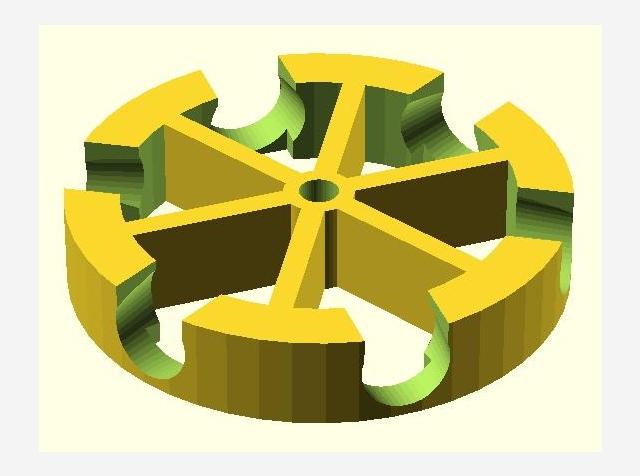
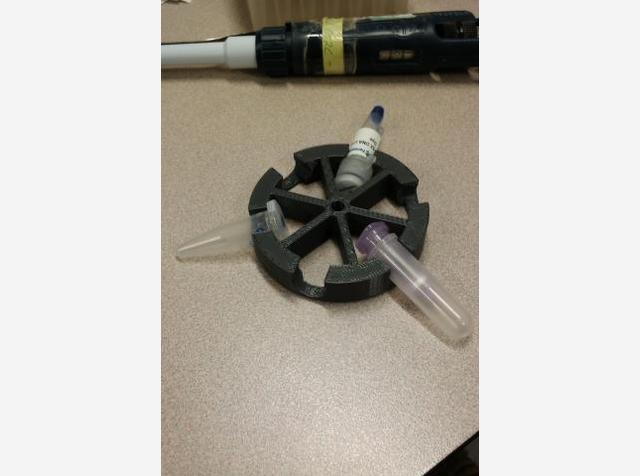
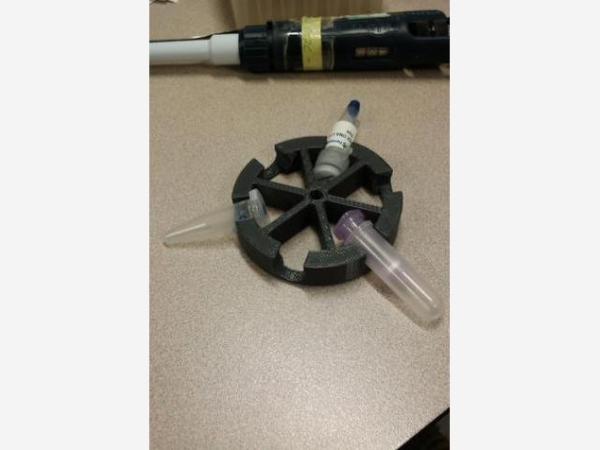
The Do-It-Yourself-Dremel-Centrifuge, DremelFuge, now nearly meets the capabilities of the best centrifuges!  As previously posted for DIYbio (in “Cathal has designed a simple centrifuge using open source hardware technology, and you can order one yourself!“), the DremelFuge is an adapter which turns a Dremel rotary-tool into a lab-quality centrifuge capable of use in various bioprotocols.

As Cathal states on the DIYbio mailing list:

After a design revision which is now “official” and for sale on Shapeways, the Dremelfuge can hold tubes securely, with liquid load, up to the full speed of a Dremel 300. At a top speed of 33,000 RPM, this means the tubes experience about 52,000RCF (g).

Read more

Rob Carlson discusses DIYbio and Open Source biology on The Economist

January 1, 2010

Jonathan Cline

Rob Carlson on synthetic biology: THE ECONOMIST

Rob Carlson states: innovators are necessary to create solutions to pressing problems – and these innovators often work with or come from interest groups such as DIYbio.

The Economist: “You can do a lot in your garage – A professor of biosynthesis on DIYbio / open-source biology, buying DNA online and the problem with patents”
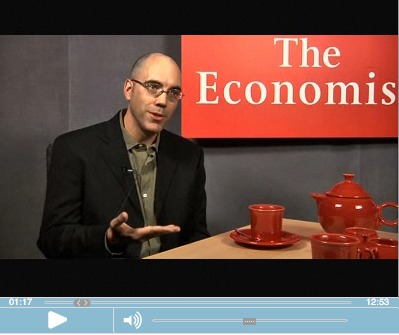
Rob Carlson on THE ECONOMISTRob Carlson on synthetic biology

Support the Public Library of Science (PLoS) with their Logo!

December 31, 2009

Jonathan Cline

Many of us in the DIY realm rely on the open publications of the Public Library of Science at plos.org. I Support the Public Library of Science

You may feel surprised to know that PLoS has web icons which you can display on your own web page!  Check it out, make your science blog or web notebooks “PLoS inside” to raise awareness of their efforts.  Here’s how:

Read more

DIY Centrifuge using Dremel Tool

December 30, 2009

Jonathan Cline

Cathal has designed a simple centrifuge using open source hardware technology, and you can order one yourself!  (For use as entertainment purposes only, of course; wouldn’t want anyone to save nearly a thousand dollars by not buying real centrifuge now would we?)

Dremelfuge is a rotor designed to fit standard lab microcentrifuge tubes and miniprep/purification columns, to be spun by either a powerdrill or other
chuck-loading machine or by a popular rotary tool.
Dremelfuge features an easy click-in loading system which holds tubes
parallel to the plane of rotation for optimum pelleting and delivery of
force.

Read more

U.S. Office of Science and Technology Policy soliciting YOUR feedback on "Improving Public Access to Results of Federally Funded Research" until Dec 20, 2009

December 12, 2009

Jonathan Cline

The U.S. Office of Science and Technology Policy, under directives from the President Obama administration, is soliciting public feedback. Note the deadline! (Dec. 10th-20th for this phase)

Policy Forum on Public Access to Federally Funded Research: Implementation

Thursday, December 10th, 2009 at 7:25 pm by Public Interest Declassification Forum

By Diane DiEuliis and Robynn Sturm

Yesterday we announced the launch of the Public Access Forum, sponsored by the White House Office of Science and Technology Policy. Beginning with today’s post, we look forward to a productive online discussion.

One of our nation’s most important assets is the trove of data produced by federally funded scientists and published in scholarly journals. The question that this Forum will address is: To what extent and under what circumstances should such research articles—funded by taxpayers but with value added by scholarly publishers—be made freely available on the Internet?

The Forum is set to run through Jan. 7, 2010, during which time we will focus sequentially on three broad themes (you can access the full schedule here). In the first phase of this forum (Dec. 10th-20th) we want to focus on the topic of Implementation. Among the questions we’d like to have you, the public and various stakeholders, consider are:

  • Who should enact public access policies? Many agencies fund research the results of which ultimately appear in scholarly journals. The National Institutes of Health requires that research funded by its grants be made available to the public online at no charge within 12 months after publication. Which other Federal agencies may be good candidates to adopt public access policies? Are there objective reasons why some should promulgate public access policies and others not? What criteria are appropriate to consider when an agency weighs the potential costs (including administrative and management burdens) and benefits of increased public access?
  • How should a public access policy be designed?
    1. Timing. At what point in time should peer-reviewed papers be made public via a public access policy relative to the date a publisher releases the final version? Are there empirical data to support an optimal length of time? Different fields of science advance at different rates—a factor that can influence the short- and long-term value of new findings to scientists, publishers and others. Should the delay period be the same or vary across disciplines? If it should vary, what should be the minimum or maximum length of time between publication and public release for various disciplines? Should the delay period be the same or vary for levels of access (e.g. final peer reviewed manuscript or final published article, access under fair use versus alternative license)?
    2. Version. What version of the paper should be made public under a public access policy (e.g., the author’s peer-reviewed manuscript or the final published version)? What are the relative advantages and disadvantages of different versions of a scientific paper?
    3. Mandatory v. Voluntary. The NIH mandatory policy was enacted after a voluntary policy at the agency failed to generate high levels of participation. Are there other approaches to increasing participation that would have advantages over mandatory participation?
    4. Other. What other structural characteristics of a public access policy ought to be taken into account to best accommodate the needs and interests of authors, primary and secondary publishers, libraries, universities, the federal government, users of scientific literature and the public?

We invite your comments [...]

Give government your feedback on how to release data and publications from publicly funded research.

More information is in the U.S. Office of Science and Technology Policy video:

Read more

Bill & Melinda Gates Foundation Grand Challenges Explorations Round 4

September 4, 2009

Jonathan Cline

The Bill & Melinda Gates Foundation is now accepting grant proposals for Round 4 of Grand Challenges Explorations, a US$100 million initiative to encourage unconventional global health solutions. Anyone can apply, regardless of education or experience level.

Grant proposals are being accepted online at http://www.grandchallenges.org/explorations until November 2nd 2009.

A Quick Guide to Teaching R Programming to Computational Biology Students

September 4, 2009

Jonathan Cline

A great article in the recent PLoS Computational Biology – freely accessible to all!  Additionally, check out: OpenWetWare’s topic on “R”.

A Quick Guide to Teaching R Programming to Computational Biology Students

by Stephen J. Eglen*, Cambridge Computational Biology Institute, Department of Applied Mathematics and Theoretical Physics, University of Cambridge, Cambridge, United Kingdom

http://www.ploscompbiol.org/article/info%3Adoi%2F10.1371%2Fjournal.pcbi.1000482

The name “R” refers to the computational environment initially created by Robert Gentleman and 1 Robert Ihaka, similar in nature to the “S” statistical environment developed at Bell Laboratories (http://www.r-project.org/about.html) [1]. It has since been developed and maintained by a strong team of core developers (R-core), who are renowned researchers in computational disciplines. R has gained wide acceptance as a reliable and powerful modern computational environment for statistical computing and visualisation, and is now used in many areas of scientific computation. R is free software, released under the GNU General Public License; this means anyone can see all its source code, and there are no restrictive, costly licensing arrangements. One of the main reasons that computational biologists use R is the Bioconductor project (http://www.bioconductor.org), which is a set of packages for R to analyse genomic data. These packages have, in many cases, been provided by researchers to complement descriptions of algorithms in journal articles. Many computational biologists regard R and Bioconductor as fundamental tools for their research. R is a modern, functional programming language that allows for rapid development of ideas, together with object-oriented features for rigorous software development. The rich set of inbuilt functions makes it ideal for high-volume analysis or statistical simulations, and the packaging system means that code provided by others can easily be shared. Finally, it generates high-quality graphical output so that all stages of a study, from modelling/analysis to publication, can be undertaken within R. For detailed discussion of the merits of R in computational biology, see [2].

A Mention of DIYBio in the Commercial Development of Synthetic Biology

July 20, 2009

Jonathan Cline

The following is a cross-post from the 88 Proof Synth Bio Blog.

BIO hosted a round-table discussion with leading-edge companies on technical and commercial advances in applications of synthetic biology. Speakers in the session represent leading firms in the field, Amyris, BioBricks Foundation, Verdezyne and Codexis.”

This industry-centric conference call prominently mentioned “hobbyists doing Synthetic Biology in their garages.” The Progress in Commercial Development of Synthetic Biology Applications podcast can be listened to at this link.

BIO is a biotechnology advocacy, business development and communications service organization for research and development companies in the health care, agricultural, industrial and environmental industries, including state and regional biotech associations.

Below are my notes and summary from the conference call. (Disclaimer: all quotes should be taken as terse paraphrases and see the official transcript, if any, for direct quotes.)

BIO:

“BIO sees synthetic biology as natural progression of what we’ve been doing all along [previous biology and biotech commercial research]. [...] Industrial biotechnology gives us tools to selectively add genes to microbes, to allow us to engineer those microbes for the purposes of [biofuels] or production of other useful products. Synthetic biology is another tool which allows us to do this, and is an evolutionary technology, not a revolutionary technology. It grows out of what our companies have always been doing with metabolic shuffling or gene shuffling, etc. [Synthetic biology] has become so efficient that new ways of thinking about this field are necessary. We are beginning to build custom genomes from the ground up, a logical extension of the technologies [biotech companies] have developed. [...] “

Industrial biotechnology’s phases:

1. Agriculture (previous phase)
2. Heathcare (previous phase)
3. and today’s phase: biofuel production, food [enrichment], environmental cleanup

Challenges in today’s world are: energy and environment (greenhouse gases, manufacturing processes, … how to also develop these in the developing world); Synthetic biology can help to address these problems.

“Every year the development times [of modifying organisms for specific tasks] are shortened [due to availability of more genomic information].”

“There is unpredictability in synthetic biology [however] this is still very manageable.”

This comment was a response to a ‘fluffy’ question about the ‘risks/dangers’ of the technology.

“[This technology is accessible because as we have heard in the news] there are now home hobbyists experimenting with this in their garage laboratories.”

Hmm; I wonder who they are talking about..

Amyris:

“We have been moving genes around for quite a while. [The difference today which yields Synthetic Biology is that] we can do things easily, rapidly and at small [measurement] scale.” Synthetic biology allows scientists to integrate all the useful [genomic, bioinformatics] data into a usable product [much more rapidly than before]. Previously it would take months to modify a microorganism, now we are down to 2-3 weeks [which is] limited only by the time required for yeast to grow [and we aren't looking to speed that part up]; this is a rapid increase in the ability to test ideas and [measure] outputs. We view synthetic biology as very predictable [in the sense that un-intended consequences are inherently reduced]. We engineer microorganisms to grow in a [synthetic environment for fermination in a ] steel tank which reduces it’s ability to grow in a natural environment [thus] the organism loses out against environmental yeast [so modified organisms won't cause problems in the environment since they will die]. We need more people who can understand complete pathways, complete metabolisms.”

Verdezyne:

“Synthetic Biology is a toolset to create renewable fuels and chemicals. [...] The benefits of Synthetic biology are, 1. profitability, as sugar is a lower cost of carbon; 2. efficiency, from use of [standard high efficiency] fermentation processes; 3. from efficiency improvements, this improves margin, 4. decreased capital costs; 5. Use of bio-economy, using local crops [for biomass] or local photosynthetic energy to yield [chemicals for local use]. Now we can explore entire pathways in microorganisms [compared to previously when we could only look at single genes]. Traditionally, chemical engineering is the addition of chemicals to create a functionality [whereas in microbial engineering the microorganism directly creates the outputs desired]. We retooled for synthetic biology very easily [from originally building chemical engineering systems].”

Codexis:

“Biocatalysts [are] enzymes or microbes with novel properties [for commercial use]. Green alternatives to classic manufacturing routes. Biocatalysts require fewer steps and fewer harmful chemicals. Synthetic biology is one tool towards this [to] quickly create genes and pathways [using the massive amounts of genomic information now available]. [Use of] Public [genome] databases [allow us to] chop months off the [R&D] timeline. [One desire] of scientists in synthetic biology is making the microorganisms [predictable, as in in engineering] however in commercial environments we can make variants very quickly [so we can deal with variants]. There are many companies which focus on commodification of biological synthesis and we use a variety of suppliers. The analysis [the R&D] required for designing new pathways is [what is lacking in skillsets of today's biologists].”

Drew Endy:

Patents costs are drastically more than the cost of the technology itself. The technology of the iGEM competition costs $3-4 million per year for all international teams, whereas the costs of patenting all submitted Biobricks every year would be 25k per part for 1,500 parts for a total of over $37 million dollars; thus, the patent costs are much more expensive than the technology, so this is an area which is being worked on. The next generation of biotech is hoped to “run” on an open “operating system” made from an open foundation [where new researchers can use existing genetic parts as open technology rather than having to build everything from scratch].

(For my further editorial, go to the full post at 88 Proof Synth Bio Blog.)

There you have it. Synthetic biology is the leaner, meaner biotech for the future.